
A roof can look worn without needing to be completely rebuilt, but visible damage does not always show the full condition of the roofing system. For homeowners in Akron, NY, the choice between reroofing and roof replacement depends on the number of existing layers, the condition of the roof deck, the extent of leaks, and how well the structure can handle another roofing system.
Understanding the difference can make repair decisions clearer and help prevent short-term work from being used where a more complete solution is necessary.
What is reroofing?
Reroofing means installing a new layer of roofing material over an existing roof covering. In many residential cases, this involves placing new asphalt shingles over one existing layer of shingles without removing the original layer.
The work may be appropriate when:
- The existing shingles are generally flat and secure
- There is only one layer of roofing already in place
- The roof deck is dry, solid, and free of widespread rot
- Leaks are limited or related to aging surface materials
- Flashing around roof edges, vents, chimneys, and other openings can remain effective or be properly addressed
Reroofing is not the same as repairing a few damaged shingles. It covers a larger portion, or sometimes all, of the roof surface, but it leaves much of the underlying roofing assembly in place.
Because the old shingles remain underneath, the condition of the roof deck and underlayment is not fully visible during the installation. That limitation makes reroofing unsuitable for roofs with hidden structural or moisture problems.
What does full roof replacement involve?
A full roof replacement generally means removing the existing shingles or other roof covering down to the underlayment or roof deck. The exposed materials can then be inspected, repaired, or replaced before a new roofing system is installed.
A replacement may include:
- Removal and disposal of old roofing materials
- Replacement of damaged roof decking
- New underlayment and ice-dam protection where required
- New flashing around penetrations and roof transitions
- Replacement of deteriorated vents or edge materials
- Installation of a new roof covering
The main advantage is access. Once the roof is opened, problems that cannot be seen from the ground become easier to identify. This includes soft decking, staining beneath old flashing, inadequate ventilation, and areas where water has traveled below the visible leak.
A roof replacement usually requires more labor and creates more construction debris than reroofing. It also provides a more complete opportunity to correct installation problems that may have developed over many years.
How are reroofing and replacement different?
The simplest distinction is that reroofing adds a new roof covering over an existing one, while replacement removes the old covering so the roofing system underneath can be examined.
Other differences include:
Inspection: Replacement allows direct inspection of the roof deck. Reroofing does not expose the deck across the entire roof.
Layers: Reroofing may be limited by the number of existing roof layers allowed by applicable building requirements. Adding another layer over multiple old layers can create excess weight and conceal damage.
Durability: A properly installed replacement generally offers a cleaner, more complete roofing system. Reroofing can still perform well when the existing roof is suitable, but it does not reset every part of the roof assembly.
Cost and disruption: Reroofing is often less disruptive because fewer materials are removed. Replacement typically takes more time and generates more debris.
Flashing: Full replacement makes it easier to renew or correctly integrate flashing. Reroofing may leave old flashing in place, which can become a weak point even when the new shingles look sound.
When is reroofing usually a reasonable option?
Reroofing is most suitable for a roof that is aging but still structurally sound. Minor surface wear, scattered granule loss, or widespread shingle aging may not automatically require removal of the entire roof.
The roof should also have a simple condition underneath. If there are no signs of sagging, widespread leaks, or damaged decking, adding a new layer may be considered under the applicable code and installation requirements.
Reroofing is less appropriate when shingles are badly curled, buckled, or uneven. A new layer installed over a distorted surface may not lie flat or seal properly. It can also make future inspections more difficult.
The shape of the roof matters as well. Complex roofs with many valleys, dormers, low-slope transitions, chimneys, and penetrations contain more areas where water can enter. In those situations, removing the existing materials may provide a better opportunity to correct details rather than covering them.
When is full replacement the safer choice?
Full replacement is generally more appropriate when the roof has widespread or recurring problems that cannot be explained by a few isolated defects.
Warning signs include:
- Repeated leaks in different areas
- Sagging roof sections
- Soft or damaged decking
- Large areas of missing, cracked, curled, or buckled shingles
- Water stains that return after repairs
- Rot around eaves, valleys, or roof penetrations
- More than one existing layer of roofing
- Severe storm damage across a broad section
- A roof that has already been covered once and is aging again
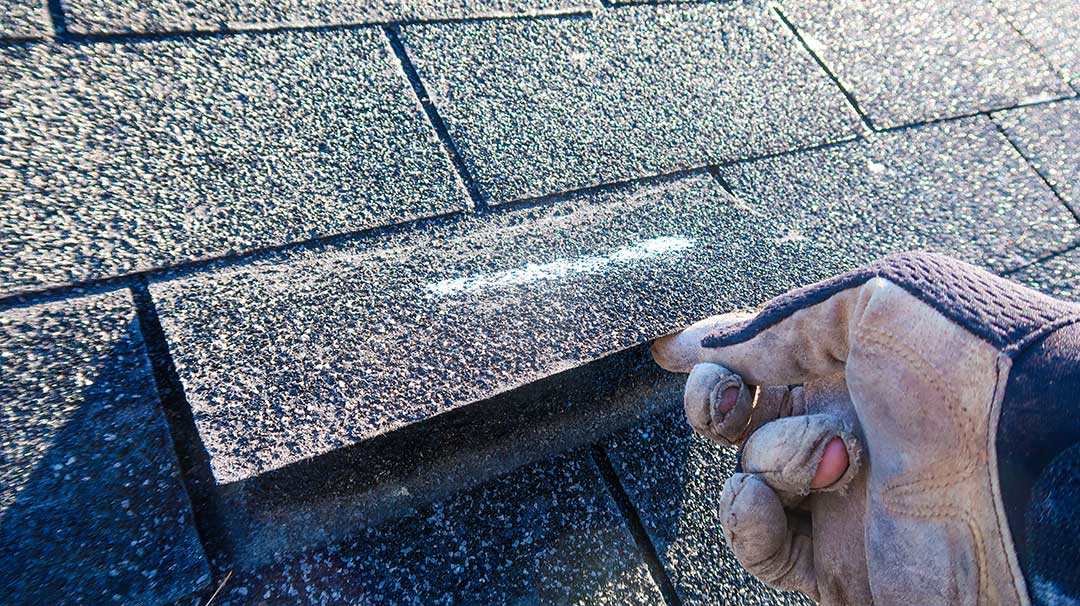
A leak inside the home does not always mean the entire roof must be replaced. Water can travel along roof decking or framing before entering the attic or ceiling. However, multiple leak locations or persistent moisture often indicate that surface patching is no longer addressing the underlying cause.
Roof replacement may also be the better option when the existing roof has reached the end of its service life and several related components are worn at the same time. Replacing only the visible shingles may leave old underlayment, flashing, ventilation, or decking problems unresolved.
Why local weather matters in Akron
Roofing in Akron must handle cold winters, snow, wind, rain, and repeated freeze-thaw cycles. Snow and ice can remain on a roof for extended periods, while warmer periods can produce melting and refreezing near eaves and roof edges.
These conditions make several details especially important:
- Secure shingles that can resist wind
- Proper underlayment near eaves and vulnerable transitions
- Sound flashing around penetrations
- Adequate attic ventilation and insulation
- Roof edges that are not weakened by rot or prolonged moisture
Freeze-thaw movement can enlarge small cracks and loosen materials over time. A roof that appears acceptable in dry weather may reveal weaknesses during winter precipitation or spring thaw. For that reason, the age and visible appearance of shingles should be considered alongside attic conditions, leak history, and the condition of the roof deck.
Does a new layer fix ventilation or structural problems?
No. Reroofing primarily changes the outer roof covering. It does not automatically correct poor attic ventilation, inadequate insulation, damaged decking, sagging framing, or improperly installed flashing.
If the attic is damp, contains mold-like staining, or shows frost buildup in winter, the cause may involve air leakage or ventilation rather than shingles alone. Similarly, a sagging roofline points to a structural concern that should not be concealed beneath another layer of roofing.
A full replacement creates more access to investigate these issues, but replacing shingles alone does not guarantee that they will be corrected.
What should homeowners check before deciding?
Before choosing between reroofing and replacement, consider:
- How many layers are already on the roof
- Whether leaks are isolated or recurring
- Whether the roof deck feels soft or shows staining
- Whether shingles are flat and securely attached
- The condition of flashing and roof penetrations
- Signs of attic moisture or poor ventilation
- Whether the roofline is straight or visibly sagging
- Applicable New York State building requirements
The final decision should be based on the complete roofing assembly, not just the appearance of the shingles from the yard. Reroofing can be reasonable for a sound, single-layer roof with limited problems. Full replacement is generally the more thorough approach when moisture, structural damage, multiple layers, or widespread deterioration are present.
